


Termite Station Monitoring Explained: What to Check at Each Inspection

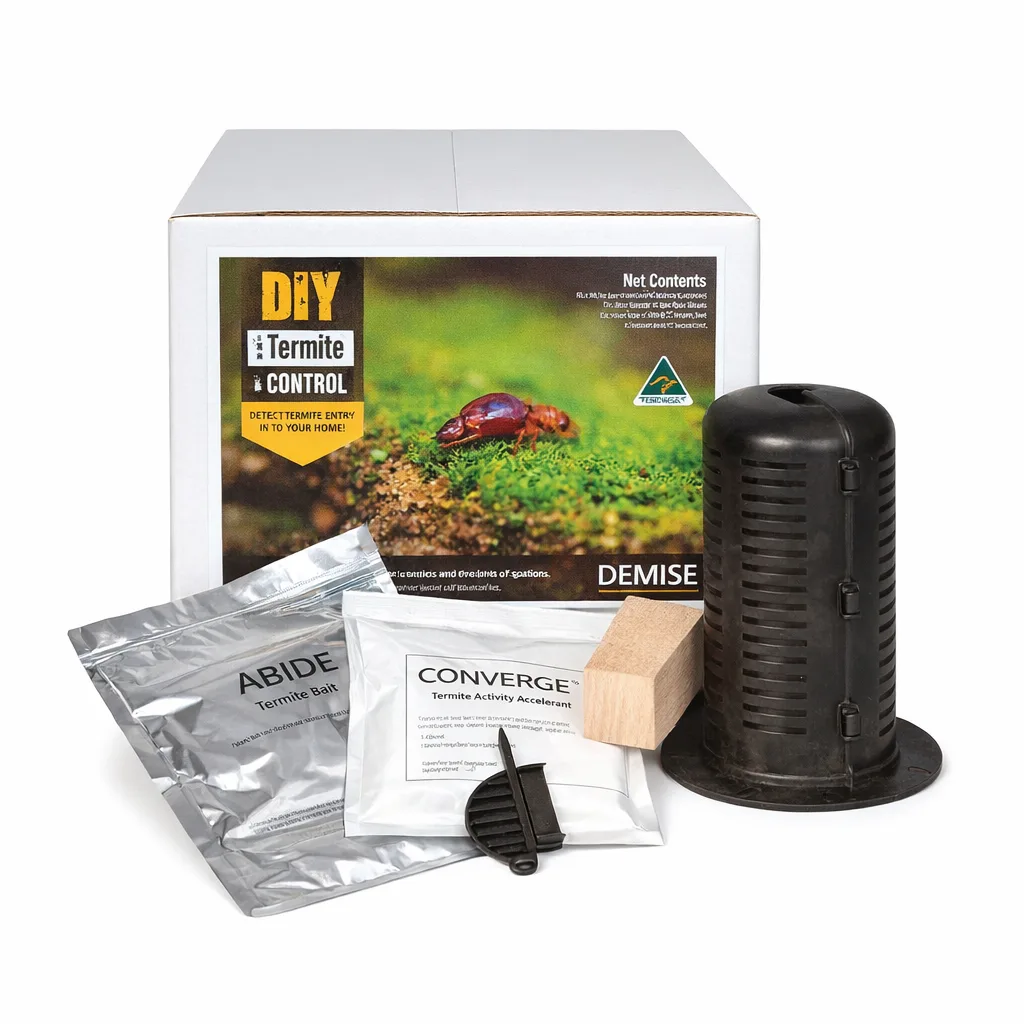
Regular inspections are what turn an in-ground termite station system into an ongoing monitoring program. With the Demise DIY Termite Detection & Elimination Kit – 5 In-Ground Bait Stations, each visit should be a deliberate check for termite activity, station condition and any changes that require follow-up.
At a glance
Check Every Station
Inspect all five stations for access, condition and termite activity.
Start With Monitoring
Initial inspections are scheduled at 8–12 week intervals.
Increase Inspection Frequency
Use 7–14 day checks after termite activity is detected.
Bait After Detection
Add ABIDE™ bait only when activity is found, following the directions.
Reset For Monitoring
Clean and reset stations after feeding has ceased and activity is no longer detected.
Understand the monitoring stages
The Demise system is designed to detect activity before termite bait is introduced. During the initial monitoring stage, the supplied bait wood blocks and DEMISE™ CONVERGE™ activity accelerant are placed in the stations. The stations are then checked initially at 8–12 week intervals.
If termites are found inside a station, the process changes from routine monitoring to more frequent baiting inspections. The supplied ABIDE™ Termite Bait is added to an affected station as directed, and that station is checked at 7–14 day intervals while feeding continues.
What to check at every visit
1. Station access and condition
Begin by locating each of the five stations and checking that the lids and surrounding ground remain accessible. Look for soil, mulch, vegetation or other material that could make the station difficult to open or inspect. Confirm that the station has not been disturbed, damaged or covered since the previous visit.
Do not treat an inaccessible station as a completed inspection. If you cannot safely open or examine it, note the issue and restore access in accordance with the product directions.
2. Signs of termite activity
Inspect the bait wood blocks inside each station for evidence of termite feeding or occupation. Activity may not be present in every station, so assess all five rather than assuming that one inactive station represents the entire property.
Record which station shows activity and describe what you observed. Keeping a simple date-and-station record makes it easier to identify recurring activity and determine which stations need closer attention.
3. The condition of monitoring materials
Check whether the bait wood blocks remain suitable for continued monitoring and whether the activity accelerant is positioned as directed. Avoid moving materials unnecessarily, because consistent placement helps make inspections comparable over time.
The purpose of this stage is detection. Do not add ABIDE™ Termite Bait simply because a scheduled inspection has occurred; the supplied product information describes bait as being added when termite activity is detected.
When activity is detected
Once termites are found in a station, follow the product directions for preparing and placing the ABIDE™ Termite Bait. The supplied instructions describe mixing the bait with bottled water into a paste and placing it directly into the affected station. Use gloved hands when mixing and handling the bait.
Mark the affected station clearly in your inspection notes and move to the shorter inspection cycle. Check it at 7–14 day intervals while feeding activity continues. At each visit, look for ongoing feeding and replenish the bait as required according to the directions.
Continue checking the other stations as part of the wider monitoring routine. Activity in one station does not remove the need to inspect the remaining stations around the property.
When feeding has ceased
A station should not be considered complete merely because bait is no longer visibly disturbed. Continue following the product directions and look for confirmation that termite activity has ceased and no further activity is detected.
After feeding has ceased, the supplied maintenance approach is to remove and clean the station, fit new bait wood blocks and return the station to the ground for continued monitoring. This allows the station to serve again as a detection point rather than leaving it in a completed baiting state.
Keep an inspection record
A useful record can include:
- The inspection date and the person who carried it out.
- The condition and accessibility of each station.
- Whether termite activity was observed and which station was affected.
- Whether the station was in the monitoring or baiting stage.
- Any bait added or replenished, and the next inspection date.
These notes help maintain the correct inspection interval and reduce the chance of overlooking a station. They are particularly useful when inspections continue across changing seasons or when more than one person helps maintain the system.
Inspection checklist at a glance
For the five-station Demise kit, inspect every station, not just the one that previously showed activity. Check access, station condition, monitoring materials and signs of termite feeding. Use the 8–12 week interval for initial monitoring, change to 7–14 day inspections after activity is detected, and follow the product directions for bait preparation, handling and replenishment.
The kit includes five DEMISE™ in-ground bait stations, two 100 g bags of ABIDE™ Termite Bait, five 50 g bags of CONVERGE™ activity accelerant and ten bait wood blocks. Product directions and applicable safety information should be followed throughout installation, inspection and bait handling.
 Mosquito Traps