


Can You Install a DIY Termite Bait Station System Yourself? A Practical Planning Guide

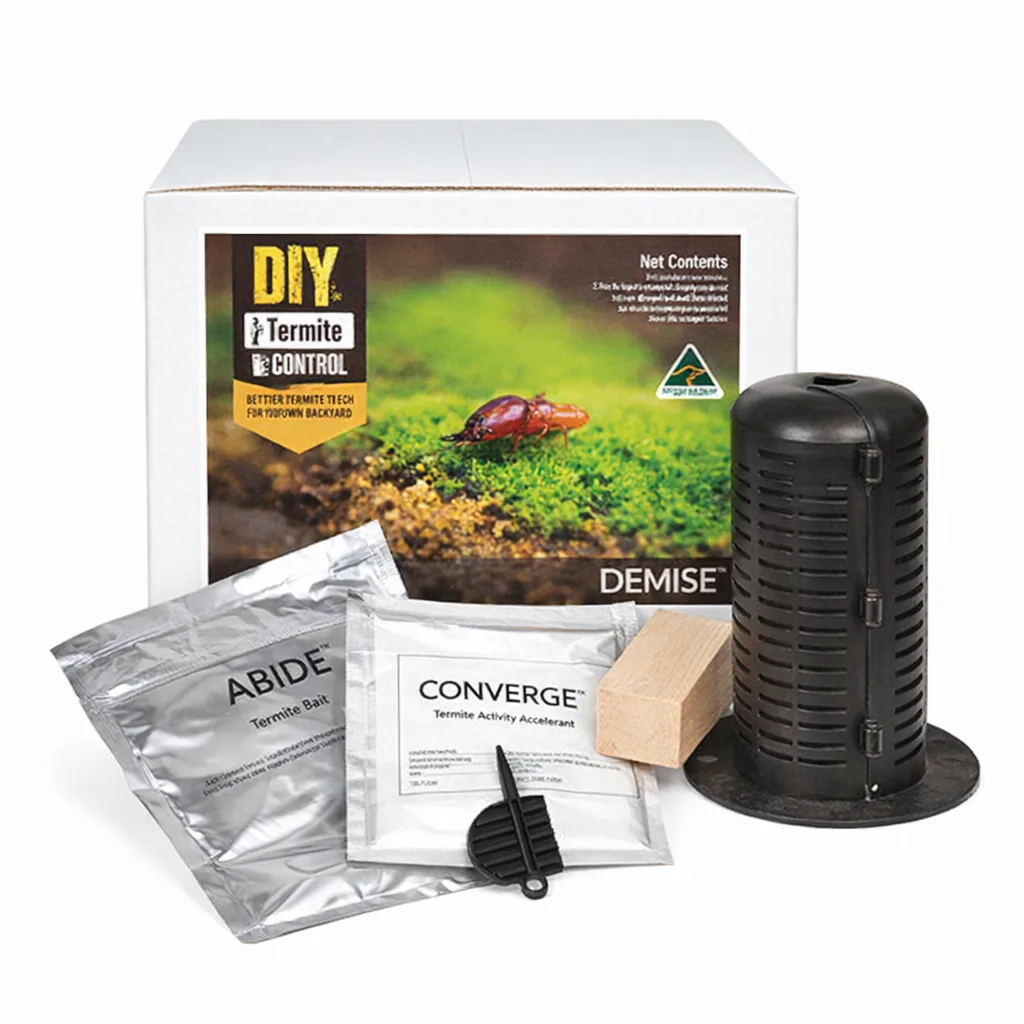
Yes, a capable homeowner can install an in-ground termite bait station system, but the work involves more than burying stations around the garden. Successful use depends on careful layout, correct installation, regular inspections and knowing when DIY monitoring is no longer enough. The Demise DIY Termite Detection & Elimination Kit – 10 In-Ground Bait Stations is designed around that staged process: detect activity first, then add bait to active stations.
At a glance
10-Station Coverage
Ten stations support perimeter monitoring around a property.
Plan Station Spacing
Install stations at approximately 3–5 metre intervals where practical.
Start With Monitoring
Initial inspections are recommended every 8–12 weeks.
Increase Check Frequency
Active stations require checks every 7–14 days.
Bait Active Stations
ABIDE bait is added after termite activity is confirmed.
What DIY installation involves
A DIY termite station system is a perimeter monitoring arrangement rather than a one-off treatment. Stations are positioned in soil around a property so they can be inspected for termite activity over time. With the Demise kit, timber monitoring blocks and CONVERGE termite activity accelerant are used during the detection stage. ABIDE termite bait is added after activity has been confirmed.
This distinction matters. Installing stations does not automatically mean termites have been found or eliminated. The system requires an ongoing routine of checking, recording activity and replenishing bait when directed.
Check whether the project suits your property
Before digging, walk around the building and identify the areas that need monitoring. Consider the full perimeter where practical, along with locations that may attract or conceal termite activity, such as wood piles, tree stumps and wooden fences.
The supplied guidance recommends placing stations at approximately 3–5 metre intervals in normal circumstances. Spacing may need to be planned around paths, paving, garden edging, drainage and other site features. Avoid placing stations where they cannot be opened and inspected easily.
A ten-station kit may suit a property requiring perimeter coverage, but the number of stations needed depends on the site layout. A complex building, extensive gardens or difficult access may require a different plan. If you suspect an active infestation in the building, visible structural damage or concealed termite entry, arrange a professional assessment rather than relying on perimeter stations alone.
Plan the installation
Mark each proposed station location before digging. The recommended installation hole is approximately 130 mm wide and 200 mm deep. A post-hole digger, round-nose shovel or auger can help create a suitably shaped hole, although the ground may require different tools depending on soil, roots or compacted material.
- Confirm the station locations and approximate spacing.
- Check for underground services before digging.
- Keep access clear so every station can be opened and inspected.
- Position stations near relevant risk areas without disturbing building footings or services.
- Follow the supplied installation directions rather than adapting the system to a similar-looking product.
Good planning is important because hidden or inaccessible stations are less useful than correctly positioned stations that can be checked consistently.
What the 10-station kit includes
The large Demise kit contains the main components needed for the monitoring and baiting sequence:
- 10 in-ground bait stations for perimeter monitoring
- Four 100 g bags of ABIDE termite bait for use after termite activity is detected
- Ten 50 g bags of CONVERGE termite activity accelerant
- 20 eucalyptus regnans bait wood blocks, also known as mountain ash
The wood blocks provide monitoring material inside the stations. The accelerant is supplied to encourage termite activity in the stations, while ABIDE is the consumable bait used during the control stage.
Follow a two-stage inspection routine
After installation, the initial focus is detection. The supplied guidance recommends checking the stations at approximately 8–12 week intervals. Inspect each station and note whether there are signs of termite activity, whether the monitoring material remains suitable and whether the station is intact and accessible.
When termite activity is found, add ABIDE bait as directed. The supplied instructions recommend mixing the bait with bottled water into a paste using gloved hands, then placing it directly into the active station. Active stations require a much shorter inspection cycle: check them approximately every 7–14 days and replenish bait as required until feeding activity has ceased.
Once feeding has stopped and no further activity is detected, the stations can be removed and cleaned, fitted with new bait wood blocks and returned to the ground for continued monitoring. This reset process makes the system suitable for repeat inspections rather than a single installation followed by no further maintenance.
Safety and when to call a professional
Wear gloves when preparing ABIDE bait and follow the product label and supplied directions for handling, placement and disposal. Keep the kit and bait components away from children, pets and anyone not involved in installation or monitoring.
DIY installation is most appropriate when you can safely dig, reach every station and maintain the inspection schedule. It is not a substitute for a building inspection where termites are already suspected inside a structure. Professional advice is particularly important if you find damaged timber, shelter tubes, live termites, persistent activity or conditions that make the building difficult to inspect.
In practical terms, you can install the Demise system yourself if you treat it as a planned monitoring programme. Measure the perimeter, choose accessible locations, install the ten stations to the recommended dimensions, inspect them on schedule and use bait only when activity is confirmed. The quality of the ongoing inspection routine is just as important as the initial digging.
 Mosquito Traps