

How to Choose a Small Hive Beetle Trap for Topbait Plus Gel Bait

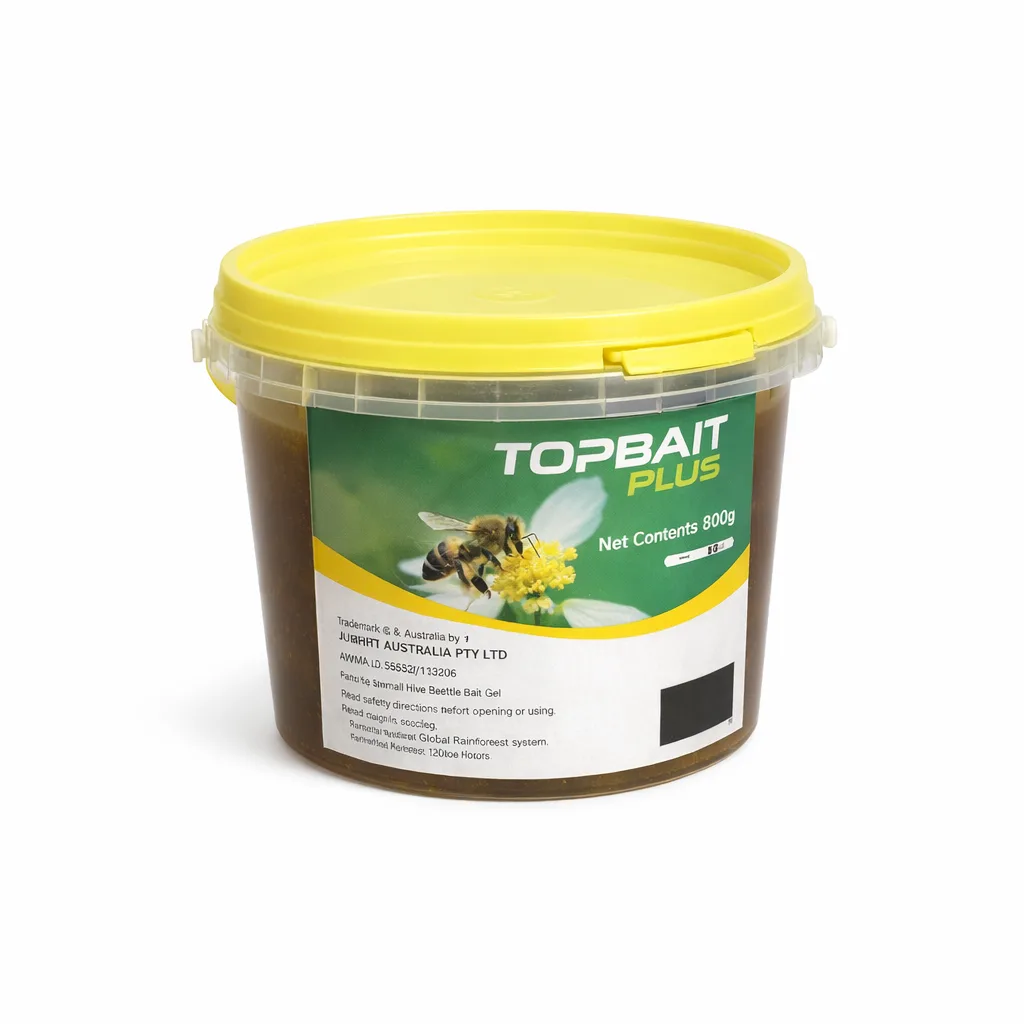
Choosing a small hive beetle trap for Topbait Plus gel bait is mainly about containment, bee exclusion and practical servicing. The trap should hold the gel securely inside the hive without allowing it to leach into the brood box, honey or other hive products.
At a glance
Choose Compatible Traps
APIS traps are specifically designed to retain Topbait Plus gel inside the hive.
Prioritise Containment
A recessed bait well helps keep the fipronil gel contained.
Check Bee Exclusion
Narrow entry slots allow beetles in while restricting bee access.
Plan Trap Maintenance
Inspect traps regularly and clear propolis from blocked entry slots.
Follow Exact Directions
Use the current label and trap directions for loading and placement.
Start with a compatible trap
Topbait Plus is intended for use inside a suitable small hive beetle trap, not as loose bait scattered through the hive. The clearest match is the APIS Small Hive Beetle Trap, which is specifically designed to retain Topbait Plus and keep the gel contained.
Compatibility matters because a trap made for oil, diatomaceous earth or sticky boards may not provide a suitable well for gel bait. Before purchasing, check that the trap instructions expressly allow Topbait Plus or a comparable gel bait. If the product information is unclear, contact the trap supplier rather than assuming the trap is suitable.
Look for secure gel containment
A suitable trap should have a dedicated recess, well or bait chamber where the gel can remain in place. The APIS design includes a central square well for Topbait Plus, while the trap structure is intended to reduce the risk of bait entering the hive.
This is an important selection criterion because Topbait Plus contains 0.05% fipronil, equivalent to 0.5 g/kg. The bait must remain inside the trap and away from bees, food, animal feed and hive products. Do not choose a trap that requires placing the gel directly on the hive floor, comb or between frames without a contained bait area.
Check the bee-exclusion design
Small hive beetle traps work best when beetles can enter but bees are restricted from reaching the bait. The APIS trap uses narrow entry slots intended to allow small hive beetles through while excluding honey bees. Bees may still propolise the slots, so the trap needs to be accessible for inspection.
When comparing alternatives, look for:
- Openings sized for small hive beetles rather than unrestricted access for bees.
- A cover or lid that protects the gel from direct contact with the hive interior.
- A stable design that will not tip, crush or smear the bait during hive inspections.
- A position in the hive recommended by the trap manufacturer.
Choose a trap you can service
Trap maintenance is part of the decision. A good design should let you inspect the bait area, remove beetles and clear debris without disturbing the colony more than necessary. With APIS traps, the lid can be checked and the entry slots cleaned with a hive tool when propolis restricts access.
Retailer guidance for APIS traps commonly recommends cleaning and reloading during routine hive management, with more frequent attention in warmer periods. Treat those intervals as general maintenance guidance only: the current Topbait Plus label and the trap manufacturer’s instructions take priority.
Reusable traps can be practical for commercial apiaries because the 800g Topbait Plus pail provides a larger working quantity for repeated baiting or replenishment. However, reusable equipment must be cleaned and handled carefully so that bait residue is not transferred to hive tools, gloves, honey equipment or work surfaces.
Consider placement and hive layout
The right trap must fit the hive configuration and remain accessible during inspections. A slim, stable trap that sits where beetles are likely to shelter may be more useful than a larger design that interferes with frames, covers or other hive components.
Follow the trap directions for placement. Do not improvise by putting gel directly into the hive box, on a sticky board or into an oil trap unless the product and trap instructions specifically permit that method. Topbait Plus is designed for controlled placement inside a compatible trap.
Review quantity and loading instructions
Trap capacity should match the manufacturer’s directions. More bait is not automatically better, and the required quantity may differ between trap designs. One APIS product listing specifies placing approximately 1 gram in the central well, while another describes an amount around the size of a 20-cent piece. Because these descriptions are not interchangeable loading instructions, use the current label and the instructions supplied with your exact trap.
Avoid filling the chamber beyond its intended capacity. Excess gel can make containment less reliable and create unnecessary handling or contamination risks.
Do not overlook safety
Keep Topbait Plus in its closed original pail, in a cool, dry, well-ventilated place away from sunlight, water and high temperatures. Keep it away from children, food, drink and animal feed, and wash hands after handling.
Fipronil is toxic to fish and aquatic organisms. Prevent spills, rinse water, unused bait and used containers from entering drains, streams or other waterways. Dispose of unused product and contaminated packaging according to local requirements.
A practical buying checklist
- Confirm the trap is approved or recommended for Topbait Plus gel bait.
- Choose a design with a dedicated, enclosed or recessed bait chamber.
- Check that beetle entry is possible while bee access to the gel is restricted.
- Make sure the trap fits your hive and can be inspected easily.
- Read the exact loading and placement directions before buying in quantity.
- Prefer a reusable design if regular cleaning and replenishment suit your apiary routine.
For the Topbait Plus 800g commercial pail, a purpose-designed APIS trap is the most directly supported choice in the available product information. Whatever trap you select, keep the gel contained, follow the current label and service the trap according to its manufacturer’s directions.
 Mosquito Traps