


German vs American Cockroaches: Identify the Species and Plan a Bait Treatment

German and American cockroaches can both infest kitchens, bathrooms and commercial premises, but their size, markings and preferred hiding places differ. Identifying the species helps you map activity and place cockroach gel bait where it is most likely to be found and consumed.
At a glance
German Identification
German cockroaches are small and often show two dark stripes behind the head.
American Identification
American cockroaches are larger, reddish-brown and commonly associated with damp service areas.
Map Activity First
Map droppings, live insects, harbourages and travel routes before placing bait.
Targeted Gel Bait
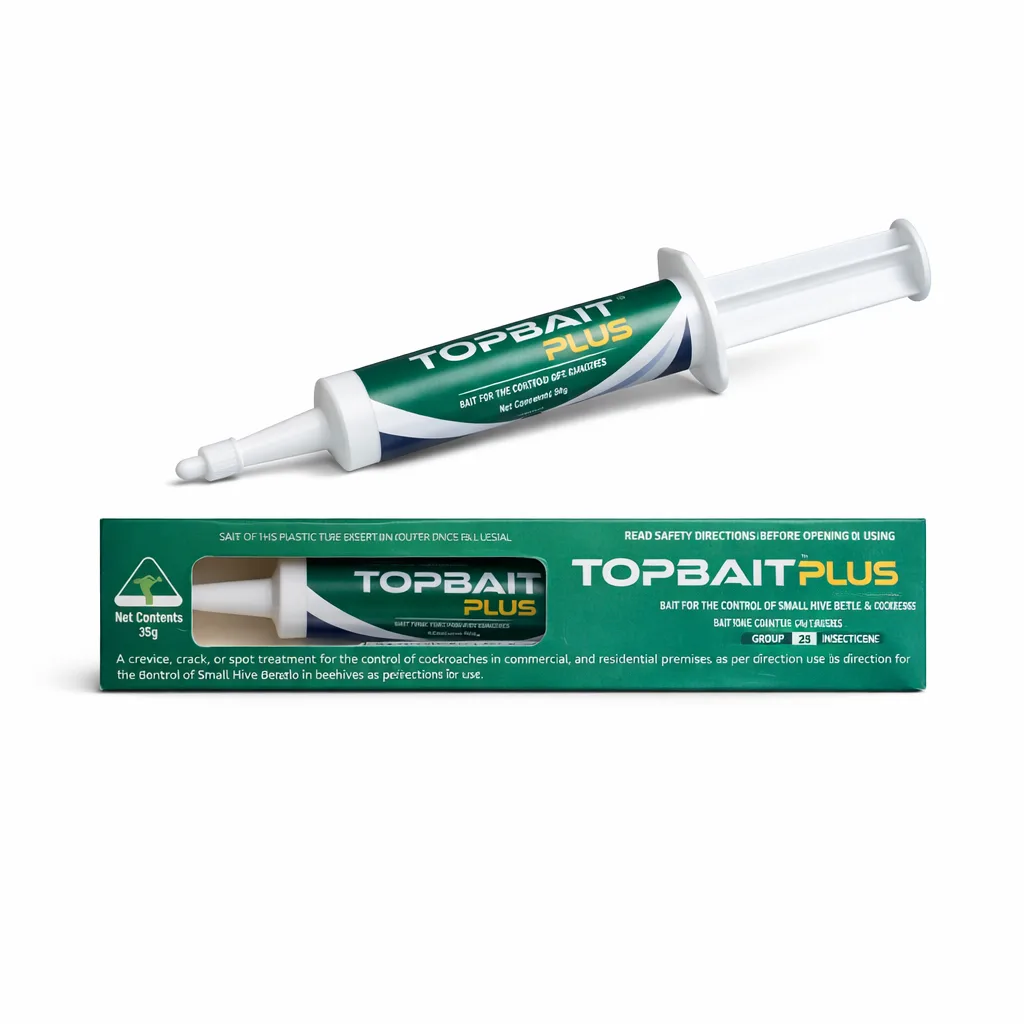
Topbait Plus is a 35g fipronil gel syringe for targeted crack, crevice and spot treatment.
Follow Safety Directions
Keep bait away from food, children and pets, and follow the product label.
How to identify German cockroaches
German cockroaches are relatively small and commonly found indoors, particularly where warmth, moisture and food are available. Look for two dark, roughly parallel stripes behind the head, on the shield-like section called the pronotum. Adults are usually light brown to tan, while younger nymphs are darker and may show a pale stripe.
Typical signs include small cockroaches moving quickly when lights are switched on, pepper-like droppings in cupboards or drawers, cast skins and egg cases. German cockroaches often shelter close to sinks, dishwashers, refrigerators, food-preparation areas and other warm appliances. Their ability to hide in narrow gaps can make spot treatment more useful than broad surface application.
How to identify American cockroaches
American cockroaches are substantially larger than German cockroaches. Adults are reddish-brown, with a lighter margin around the pronotum. They may be seen in drains, service areas, basements, plant rooms, rubbish areas and other damp locations, although they can travel into kitchens and other occupied spaces while searching for food or water.
Because American cockroaches are larger and may move through wider routes, inspect pipe penetrations, floor-level entry points, gaps around doors, drains and service cavities. Finding a large reddish-brown cockroach in a damp or lower-level area points towards American cockroach activity, but immature insects can be harder to identify. When uncertain, collect a clear photograph or seek professional identification.
German vs American cockroaches
- Size: German cockroaches are small; American cockroaches are much larger.
- Colour: German cockroaches are commonly light brown or tan; American cockroaches are reddish-brown.
- Markings: German adults typically have two dark stripes behind the head; American cockroaches have a lighter pronotum margin.
- Harbourages: German cockroaches favour warm, humid areas near appliances and food; American cockroaches are often associated with damp service, drainage and lower-level areas.
- Treatment mapping: German activity usually calls for close inspection of cupboards, appliances and tight cracks, while American activity also warrants checking entry points, pipes and damp structural spaces.
Plan a bait treatment
1. Map activity first
Inspect at night or in quiet periods, when cockroaches are more likely to move. Look for droppings, egg cases, shed skins, live insects and greasy marks. Concentrate on places where food, moisture and warmth overlap. Record the areas with the strongest signs rather than applying bait randomly.
2. Place small spots in harbourages
Topbait Plus Cockroach Gel Bait is a 35g syringe formulated for German and American cockroach control. It is intended for crack, crevice and spot treatment in residential, commercial and industrial premises. The syringe supports controlled, low-mess placement in narrow locations such as gaps behind appliances, cupboard joints, pipe areas and other inaccessible harbourages.
The product reference indicates an application rate of approximately one to three spots per square metre, with spot number and size adjusted according to infestation severity and species. Follow the current product label rather than treating this as a substitute for label directions. Avoid large exposed lines or blobs: several small placements near activity may be more useful and reduce unnecessary contamination.
3. Keep bait available but protected
Place bait where cockroaches can reach it but people, children and pets cannot. Do not apply it to food, food-preparation surfaces or food-contact surfaces. Suitable locations may include the underside of shelves, gaps between cupboards, behind appliances, under sinks around pipes and other protected cracks, provided the placement complies with the label.
4. Inspect and adjust
Recheck treated areas for bait consumption and continuing signs of activity. Renew or move placements only as directed by the label. If bait is being consumed quickly, activity remains widespread or insects are appearing in several rooms, reassess harbourages, sanitation, moisture and entry points rather than simply increasing the amount of product.
About Topbait Plus
Topbait Plus contains fipronil at 0.5 g/kg and uses a gel formulation designed for targeted placement. Cockroaches are attracted to and consume bait at the placement point; the product is not intended to be spread across open floors or work surfaces. Its 35g syringe is suited to focused applications where access to cracks and crevices is important.
Store the syringe securely in its original container and handle it according to the label and safety data sheet. Wash hands after handling, clean accidental spills as directed, and remove accessible bait where required. A bait treatment works best when combined with reduced food debris, repaired leaks, covered rubbish and attention to gaps that allow cockroaches to enter or move between areas.
Frequently asked questions
Can one bait treat both species?
Topbait Plus is intended for control of both German and American cockroaches. Placement still matters: match the bait locations to the species’ observed harbourages and travel routes.
What if I cannot identify the species?
Begin with size, colour, markings and location, then photograph the insect if possible. Use the observed activity to guide inspection, but avoid guessing when a serious or persistent infestation may require professional assessment.
Should bait be placed beside food?
No. Keep bait away from food, food-preparation areas and food-contact surfaces, and place it only where it cannot be contacted during normal use of the premises.
 Mosquito Traps