


Is a Liquid Termite Barrier Right for Your Project? A Practical Selection Guide

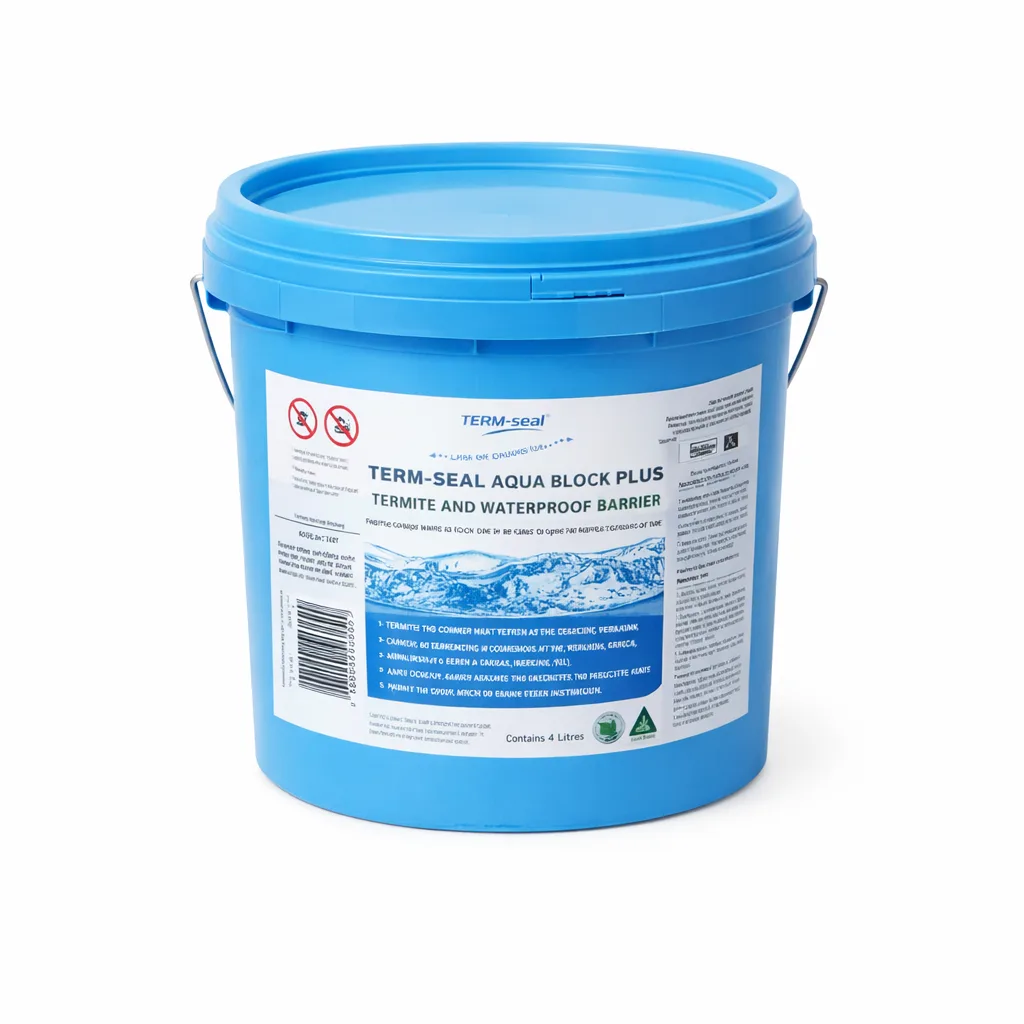
A liquid termite barrier can be a practical choice when a project needs both termite protection and moisture resistance across suitable building surfaces. The right option depends on the substrate, the area to be treated, access for application, curing conditions and how the barrier will be inspected and maintained after installation.
At a glance
Flexible Membrane
A liquid coating cures into a seamless, flexible membrane.
Suitable Surfaces
It suits supported masonry, brick, concrete and fibrous panelling.
Brush Application
Apply the product by brush or roller as directed.
Active Ingredient
Bifenthrin is the identified termite-control active agent.
4L Pack Size
The 4L pail suits smaller coating requirements.
What is a liquid termite barrier?
Unlike a rigid sheet or physical strip, a liquid barrier is applied directly to a prepared surface and cures into a continuous film. TERM-seal Aqua Block Plus is described as an acrylic polymer-based liquid that forms a seamless, flexible, termite-resistant and waterproof membrane when cured.
This format can help cover irregular surfaces and construction details where a pre-formed product may be difficult to position. It is intended for use on suitable masonry, fibrous panelling, brick and concrete surfaces. The product is available in a 4L pail, which may suit smaller repair, renovation or detail-sealing tasks.
When should you consider one?
Choose a liquid barrier when surfaces are irregular
Brush or roller application allows the coating to follow prepared building surfaces rather than requiring a sheet to be cut and fitted. This can be useful around transitions, junctions and other areas where continuity is important, provided the product label supports the specific application.
Choose one when waterproofing is also relevant
A product designed for dual termite and water protection may be useful where the treated area needs a membrane rather than termite control alone. TERM-seal Aqua Block Plus is described as providing both termite-barrier and waterproofing functions, so it may be relevant to selected masonry, brick, concrete and fibrous-panelling applications.
Choose one for accessible coating work
A liquid product is most practical when the surface can be reached, cleaned, prepared and coated evenly. The available product information identifies brush or roller application, making it suitable for controlled coating work without specialised spray equipment.
When might another barrier format be better?
A liquid coating is not automatically the best choice for every project. A sheet, physical barrier or proprietary building-system component may be preferable where the design specifically requires a pre-formed product, where the surface is unsuitable for coating, or where the installation details are governed by a certified construction system.
Consider another solution if the area cannot be properly cleaned, if ongoing movement may compromise adhesion, or if the coating cannot be protected from damage during later construction. Do not select a product based only on its termite claim; check compatibility with the substrate, surrounding materials and the intended building detail.
What to check before buying
- Substrate: Confirm that the surface is one of those supported by the label. TERM-seal Aqua Block Plus is identified for masonry, fibrous panelling, brick and concrete when applied as directed.
- Preparation: Surfaces generally need to be sound, clean and free from loose material or contaminants that could affect adhesion. Follow the product label for any required primer or preparation system.
- Coverage: Work out the treatment area and the required film thickness before choosing the pack size. Coverage can change with surface texture, application method, number of coats and specified thickness.
- Access: Make sure the whole required area can be reached with a brush or roller, including edges, joints and transitions that need continuous treatment.
- Curing time: Plan the work around the time needed for the membrane to cure before covering, backfilling or continuing construction. The product information specifies that curing directions must be followed.
- Protection after application: A cured membrane can still be damaged by later work, debris or impact. Include protection where the treated surface will be covered or backfilled.
How TERM-seal Aqua Block Plus fits
TERM-seal Aqua Block Plus 4L is a dual-purpose termite barrier and waterproofing compound rather than a rigid physical sheet. Its flexible cured membrane, brush-or-roller application and suitability for several common building surfaces make it worth considering for appropriately prepared coating areas.
The formulation is described as containing bifenthrin as the identified termite-control active agent. This is a reason to treat the product as a regulated chemical product: read the container label before use and follow all directions for personal protection, storage, disposal and preventing contamination of drains or waterways.
Installation and inspection considerations
Prepare the selected surface, apply the coating evenly as directed and allow it to cure before the area is concealed or backfilled. Do not assume that one coat, an approximate thickness or a particular preparation method is acceptable unless the label or project documentation specifies it.
A termite barrier is one part of a broader management approach. Subterranean termites can sometimes bridge barriers, so a completed installation does not remove the need for suitable building practices and regular inspections. For complex, concealed or high-consequence work, obtain advice from the relevant building professional or licensed pest-management specialist before selecting the system.
A practical decision
A liquid termite barrier is worth considering when you need a flexible, continuous coating on a supported surface and want termite protection combined with waterproofing. TERM-seal Aqua Block Plus 4L may suit smaller-scale or detail applications, but the final choice should be based on label requirements, substrate condition, required coverage, curing time and the way the finished barrier will be protected and inspected.
 Mosquito Traps