


How to Clean and Maintain a Large Insulated Ice Box After Camping or Fishing

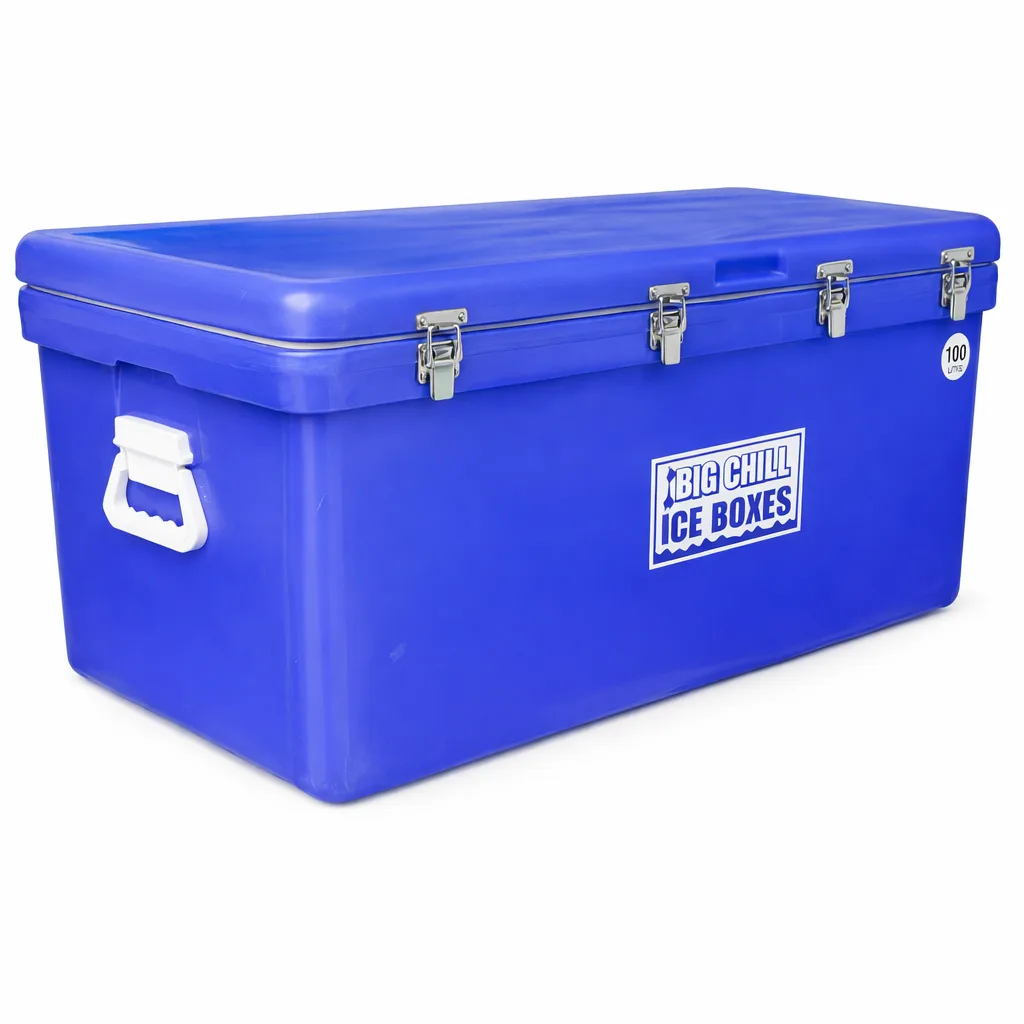
A large insulated ice box can handle demanding camping and fishing trips, but it still needs a proper clean after every outing. Removing food residue, fish odour, melted ice and grit promptly helps keep the box hygienic and makes the next trip easier to prepare for. The Big Chill 105 LTD Ice Box is listed by CW Brands as a 105-litre long ice box measuring 920L x 460W x 460H, making a methodical cleaning routine especially useful for reaching the full interior.
At a glance
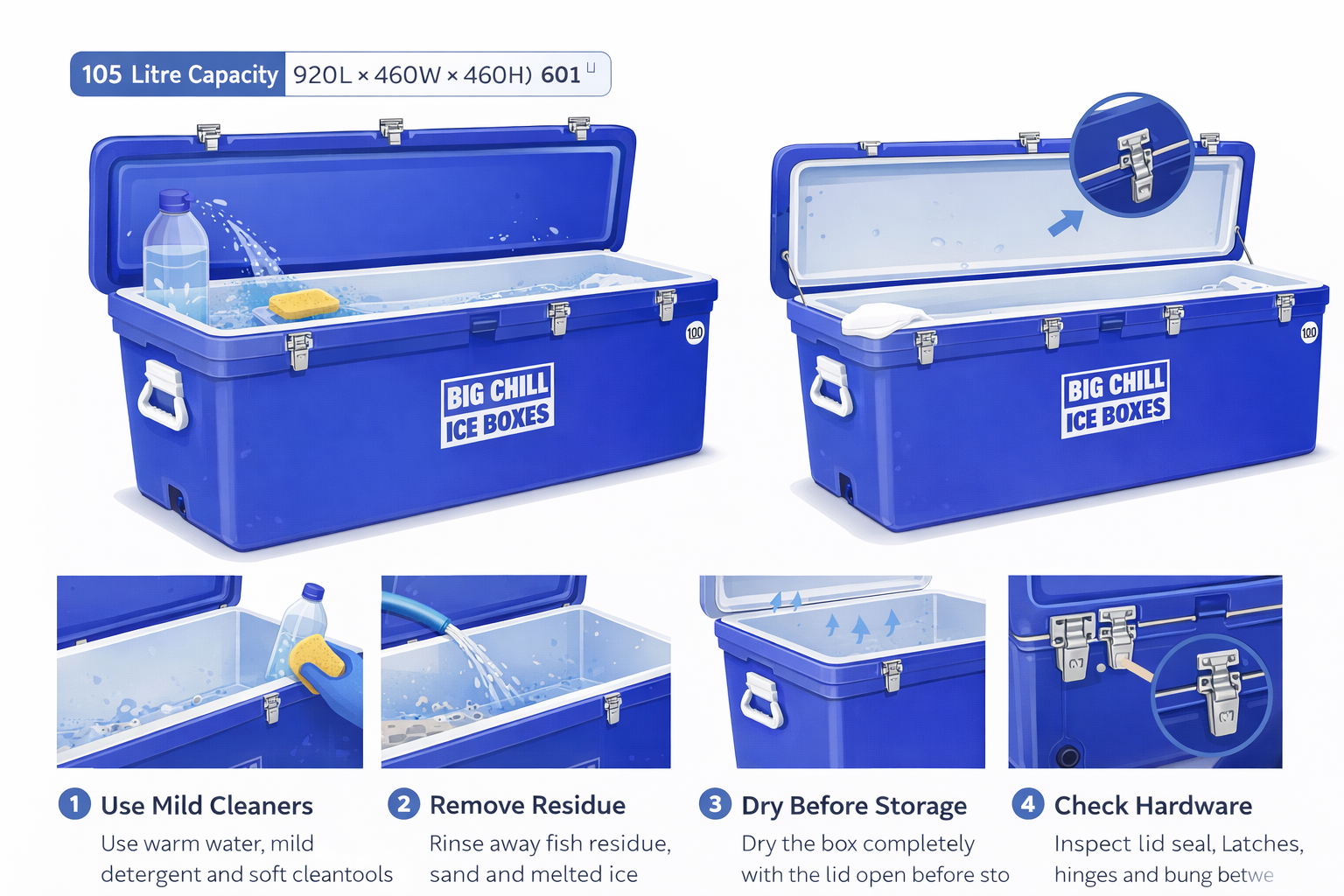
105-Litre Capacity
The Big Chill 105 is a 105-litre long ice box measuring 920L x 460W x 460H.
Use Mild Cleaners
Use warm water, mild detergent and soft cleaning tools on interior surfaces.
Remove Residue
Rinse away fish residue, scales, sand and melted ice after every outing.
Dry Before Storage
Dry the box completely with the lid open before storage.
Check Hardware
Inspect the lid seal, latches, hinges and bung between trips.
Clean It Soon After Use
Do not leave bait, fish scraps, meat packaging or drink residue inside the ice box until the next day if you can avoid it. Empty the contents as soon as practical, remove loose ice and drain any meltwater. A large box can hold water and debris in corners, so tilt it carefully and allow it to drain fully.
Separate items before cleaning. Food containers, fish-cleaning accessories and removable dividers should be washed independently rather than left inside the box while you work. Check the lid, corners, base and any drain or bung area for scales, sand, leaves and small pieces of packaging.
What You Need
- Warm water
- Mild dishwashing detergent
- Soft sponge or microfibre cloth
- Soft-bristled brush or old toothbrush
- Clean water for rinsing
- Dry towels
Use a soft sponge for the main surfaces and a soft brush for seams, corners and fittings. Avoid abrasive pads, wire brushes and harsh solvent-based cleaners unless the manufacturer specifically approves them. Scrubbing too aggressively can mark plastic surfaces and may damage seals or fittings.
Step-by-Step Interior Clean
1. Rinse Away Loose Debris
Begin with a rinse to remove sand, scales, crumbs and other loose material. Rinsing first reduces the need to scrub grit across the inner surface. Pay particular attention to the base and the junction between the walls and floor.
2. Wash With Mild Detergent
Add a small amount of mild dishwashing detergent to warm water. Wipe the interior from the lid down, working across the walls and then the base. Use the soft brush for stubborn food marks, but keep pressure moderate.
For a long ice box such as the Big Chill 105, work in sections so that the far corners are not overlooked. A cloth wrapped around a suitable handle can help reach the ends, but do not use a sharp object or tool that could scratch the lining.
3. Clean the Lid and Fittings
Odours and grime often remain around the lid edge, hinges, latches or sealing areas. Wipe these parts carefully and use a soft toothbrush around narrow gaps. Do not force water into any fitting that is not designed to be flooded.
4. Rinse Thoroughly
Rinse until no detergent remains. Residue can affect food contact surfaces and may leave an unwanted smell. If the ice box has a bung or drain, open it while rinsing so dirty water does not collect inside.
Managing Fish Odour
Fish odour is usually caused by residue rather than the insulation itself. Start with the detergent clean above, then rinse thoroughly. If an odour remains, wipe the interior with a mild bicarbonate-of-soda solution, test it on a small inconspicuous area first, and rinse again. This is a cleaning suggestion rather than a manufacturer-specific treatment, so follow any care instructions supplied with your ice box.
Do not mix cleaning products. In particular, never combine bleach, acids, ammonia-based products or other household chemicals. If a stronger sanitising treatment is needed for a food-contact surface, choose a product labelled for that use and follow its dilution, contact-time and rinsing instructions.
Drying Prevents Stale Smells
Drying is as important as washing. Drain all remaining water, wipe the interior and leave the lid open in a well-ventilated place until the box is completely dry. Dry around the lid seal, corners, bung and latches as well.
Do not close a damp ice box for storage. Trapped moisture can contribute to stale odours and mould growth. Avoid prolonged extreme heat or placing the box directly against a hot surface while drying, as the product’s exact material and heat limits are not specified in the supplied information.
Exterior and Hardware Care
Wash mud, salt spray and fishing residue from the exterior with warm water and mild detergent. Salt and grit should not be allowed to remain around latches or hardware. Rinse the outside and dry it with a clean towel.
Inspect the lid seal, hinges, latches and drain bung after cleaning. Look for cracks, distortion, looseness or debris that could prevent the lid from closing properly. Do not apply lubricant or repair compound unless the manufacturer recommends a suitable product for that component.
Storage Between Trips
Store the ice box clean, dry and empty, with the lid slightly open if practical to allow airflow. Keep it in a dry location away from sharp objects, chemicals and unnecessary heat. Before the next camping or fishing trip, check that the interior is odour-free, the bung is secure and the lid closes correctly.
The Big Chill 105 LTD Ice Box provides a 105-litre long-format capacity, with published dimensions of 920L x 460W x 460H. Its size is useful for larger loads, but it also means that cleaning should be treated as part of the pack-down process rather than postponed. A quick rinse at camp followed by a thorough wash and complete dry at home is a practical routine for keeping a large insulated ice box ready for its next outing.
 Mosquito Traps