


How Much Small Hive Beetle Bait Does an Apiary Need? Planning an 800g Pail

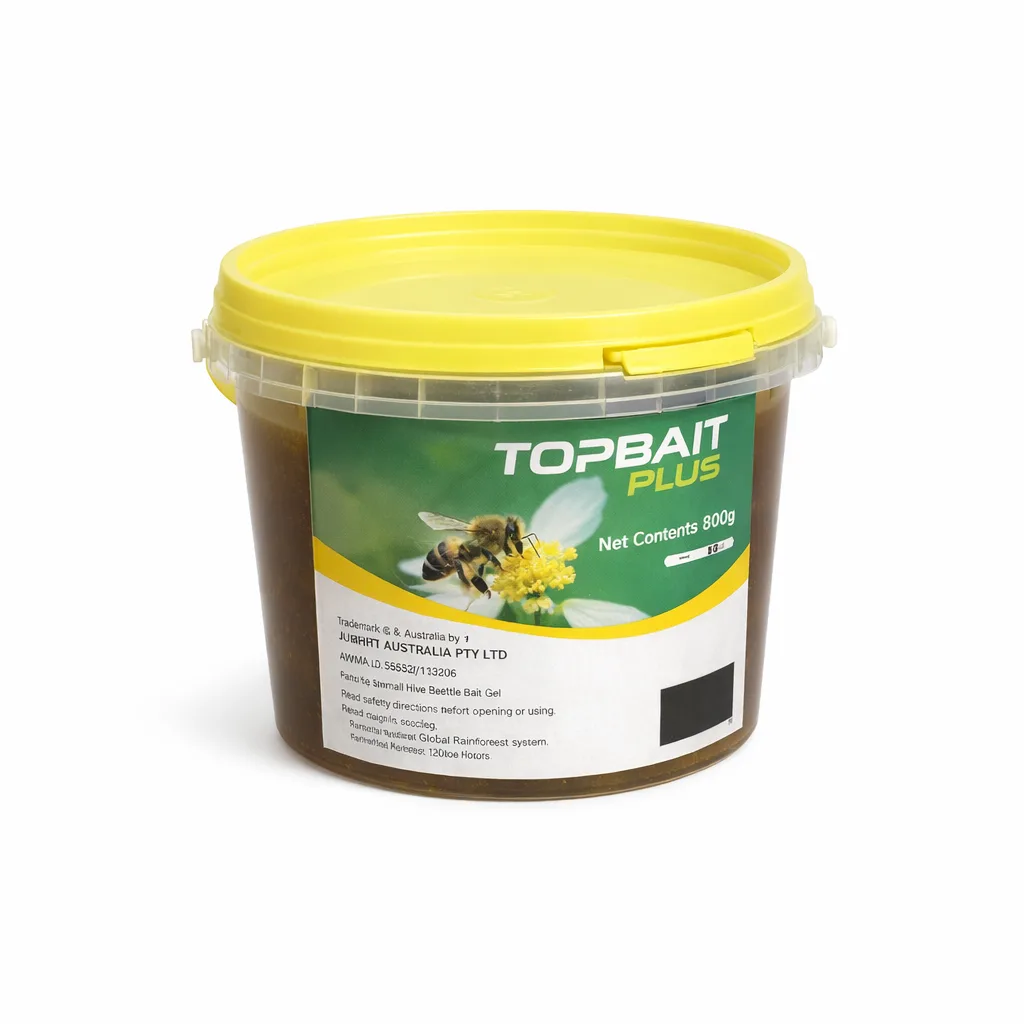
Planning bait supplies for an apiary is easier when you separate the number of hives from the amount used at each service. Topbait Plus Small Hive Beetle Gel Bait 800g Pail is a commercial-size supply intended for use inside compatible small hive beetle traps, but the number of hives one pail covers depends on the trap design, label directions and how often bait is replaced.
At a glance
800g Commercial Pack
An 800g pail contains 800g of brown gel bait for compatible hive beetle traps.
Estimate Hive-Services
Using two 1g placements per hive, the pail represents about 400 hive-services.
Check Your Usage
Actual coverage depends on trap quantity, dose, service frequency and wastage.
Store And Handle Safely
Keep bait sealed, dry and away from food, children and waterways.
Start with the trap instructions
Do not estimate usage from the pail size alone. Topbait Plus is a brown gel bait containing 0.05% fipronil, equivalent to 0.5g/kg, and is designed for controlled placement in a suitable trap inside the hive. The current product label and the compatible trap instructions determine the quantity to place, the trap position and the service interval.
For example, information supplied for the APIS Small Hive Beetle Trap specifies 1g of bait per trap and recommends two traps per hive, positioned in opposing corners. If that is the trap system being used and the label directions remain current, the planning figure is 2g per hive per baiting service. Do not transfer this quantity to another trap unless its instructions support the same dose.
Use a simple planning formula
Once the trap dose and service schedule are confirmed, estimate consumption with this formula:
Hives × traps per hive × grams per trap × number of services = total grams required
Using the APIS example of two 1g bait placements per hive:
- 10 hives: 20g per service
- 25 hives: 50g per service
- 50 hives: 100g per service
- 100 hives: 200g per service
These are planning examples, not a substitute for the product label or trap directions. Actual consumption may be higher if bait is spilled, removed during cleaning or replaced before the planned inspection interval.
How many services can 800g provide?
At 2g per hive per service, an 800g pail represents approximately 400 hive-services. That does not necessarily mean 400 different hives: a hive receiving repeated inspections uses one service allocation each time.
- 10 hives: about 40 services
- 25 hives: about 16 services
- 50 hives: about 8 services
- 100 hives: about 4 services
For a 50-hive apiary serviced weekly at this example dose, 800g would cover roughly eight weekly baiting services. For a 100-hive operation, the same pail would cover roughly four weekly services. These figures exclude wastage and assume every hive receives two 1g placements at each service.
Allow for real apiary conditions
Apiary planning should include a practical reserve rather than treating the calculated figure as exact. Bait may remain in a trap, be discarded during inspection or need replacement at different times across the yard. Keep a record of the amount placed and the date each trap was serviced. After several inspections, your actual average usage will be more useful than a generic estimate.
A useful approach is to calculate the minimum requirement first, then add a modest operational allowance for handling and uneven replacement. Keep that allowance separate in your records so you can identify whether higher consumption is caused by more frequent servicing, additional traps or wastage.
Match the pail to your operation
The 800g resealable pail is most relevant where several traps need to be baited or replenished regularly. It can suit commercial beekeepers, apiary operators and beekeepers managing multiple yards, particularly when buying small packs would create repeated ordering and handling.
For a small apiary with infrequent treatment, a smaller pack may be easier to manage. For a larger operation, compare the pail capacity with your planned service cycle, the number of traps per hive and the time between inspections. The correct quantity is determined by the treatment program, not simply by the number printed on the container.
Storage and handling affect usable supply
Keep the pail closed in its original container in a cool, dry, well-ventilated place away from direct sunlight, water and high temperatures. Store it out of reach of children and away from food, drink and animal feed.
Use the gel only inside the compatible trap and prevent contact with bees, honey, hive products, equipment and working surfaces. Avoid skin and eye contact, wash hands after handling, and clean up spills promptly. Fipronil is toxic to fish and aquatic organisms, so unused bait, rinse water and used containers must not enter drains or waterways. Dispose of unwanted product and contaminated packaging according to local requirements.
 Mosquito Traps