

Fire Ant Bait Station Placement: A Practical Monitoring Guide

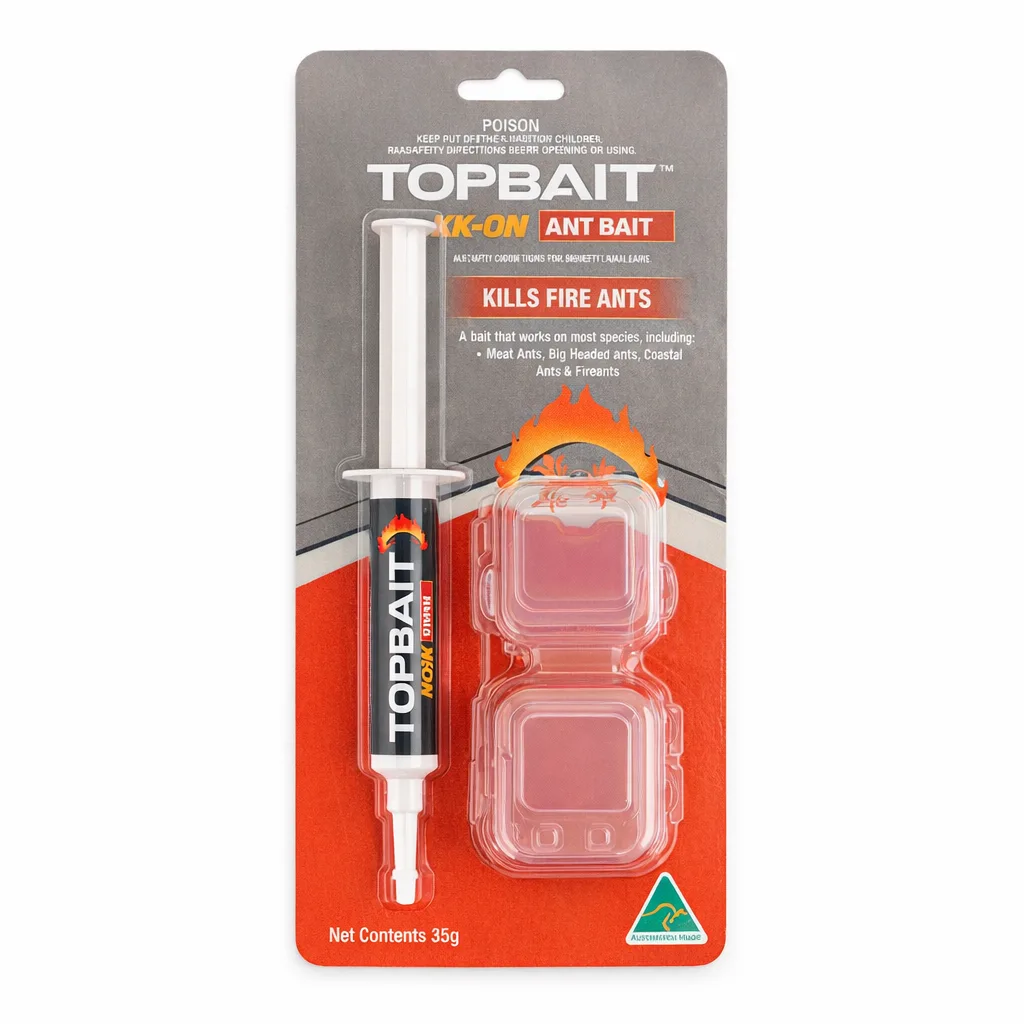
Effective fire ant bait station placement is less about covering every part of a property and more about choosing suitable, observable locations. The Topbait Knock-On Fire Ant Bait Protection Pack combines one 35g bait syringe with five stations, giving you a practical format for controlled placement and follow-up checks.
At a glance
Pack contents
The pack contains one 35g Topbait Knock-On bait syringe and five bait stations.
Follow the label
Place stations only where the product label and local guidance permit.
Select safe sites
Choose stable locations away from runoff, drains, pets and children.
Monitor regularly
Record station locations and inspect them according to the product instructions.
Active ingredient
The bait contains hydramethylnon at 10g/kg.
Start with the label
Before positioning any station, read the product label and current local fire ant treatment guidance. The label determines the permitted use, application amount, precautions, inspection instructions and disposal method. Fire ant treatment requirements can also vary by location, so check whether reporting or other local obligations apply before starting.
Use the product only for its labelled purpose. The pack contains hydramethylnon at 10g/kg, and the bait should be applied only at the labelled rate. Do not assume that a larger amount will improve results.
Choose locations deliberately
Place stations where fire ant activity is most likely to be observed, while keeping them accessible for inspection. Suitable locations should allow you to check the station without disturbing nearby soil, vegetation or suspected nest areas unnecessarily.
- Prioritise areas identified by the product label or treatment guidance.
- Choose stable, level positions where stations are unlikely to tip, become buried or be moved.
- Avoid locations exposed to runoff, irrigation spray or flooding.
- Keep stations away from drains, waterways, food, animal feed and places accessible to children or pets.
- Do not place bait where livestock or other non-target animals can reach it.
The five included stations provide separate points for planned bait placement and monitoring. Their value is not simply the number supplied; it is the ability to keep bait contained at selected locations and compare activity during subsequent checks.
Apply bait carefully
Use the syringe to apply Topbait Knock-On bait as directed on the label. Apply only the specified amount and avoid handling the bait more than necessary. The product page describes the bait as suitable for direct application or placement into the included stations, but the label remains the controlling source for the exact method and rate.
Do not sprinkle or spread the bait casually around a suspected nest unless the label specifically instructs you to do so. Current Australian fire ant guidance stresses following product directions and avoiding application directly onto a fire ant nest where that is prohibited by the treatment instructions.
Build a monitoring routine
Record where each station is positioned and when it was installed. A simple sketch, property photograph or written location note can make follow-up checks more consistent, particularly when stations are placed around gardens, lawns or other areas with similar appearance.
- Inspect stations according to the product instructions and local treatment guidance.
- Check whether bait remains, has been disturbed or has been exposed to moisture.
- Confirm each station is still upright, secure and in its intended position.
- Note evidence of activity without opening or disturbing suspected nests unnecessarily.
- Replace, remove or dispose of bait only as directed by the label.
Monitoring is not a reason to handle the bait repeatedly. Wear the protective equipment specified on the label, wash hands after handling and keep people and animals away from treated areas as directed.
Protect the placement area
Station-based baiting works best when the bait remains available at the selected point and is not washed away. Avoid placing stations immediately before irrigation or when heavy rain is expected if doing so would conflict with the label or cause runoff. Never allow bait or contaminated material to enter drains or waterways.
Keep the syringe and stations securely stored when not in use. The product should remain away from children, pets, livestock, food and animal feed. Unused bait, empty packaging and stations should be managed according to the product label rather than placed in household recycling or discarded casually.
When to seek further guidance
If you are unsure whether ants are fire ants, do not rely on the station alone as identification. Follow the current guidance for reporting suspected fire ants in your area. Australian fire ant authorities state that suspected fire ants must be reported within the required timeframe, and treatment directions may differ between individual nest treatment and broader property programs.
Also seek advice if the treatment area includes pets, livestock, children, waterways, food-growing areas or difficult access conditions. The five-station format can support controlled placement, but it does not replace the label, official treatment guidance or professional advice where site conditions are complex.
Pack contents at a glance
- One 35g syringe: Topbait Knock-On Fire Ant Bait for labelled application.
- Five bait stations: Separate points for controlled placement and monitoring.
- Active ingredient: Hydramethylnon at 10g/kg.
Used with careful positioning, written location records and regular label-compliant checks, this pack provides a straightforward way to organise fire ant bait placement without losing sight of safety and local requirements.
 Mosquito Traps