
Browse Categories
Explore the catalogue
Open page Submenu

Above-Ground vs In-Ground Termite Bait Stations: Which Approach Fits the Infestation?

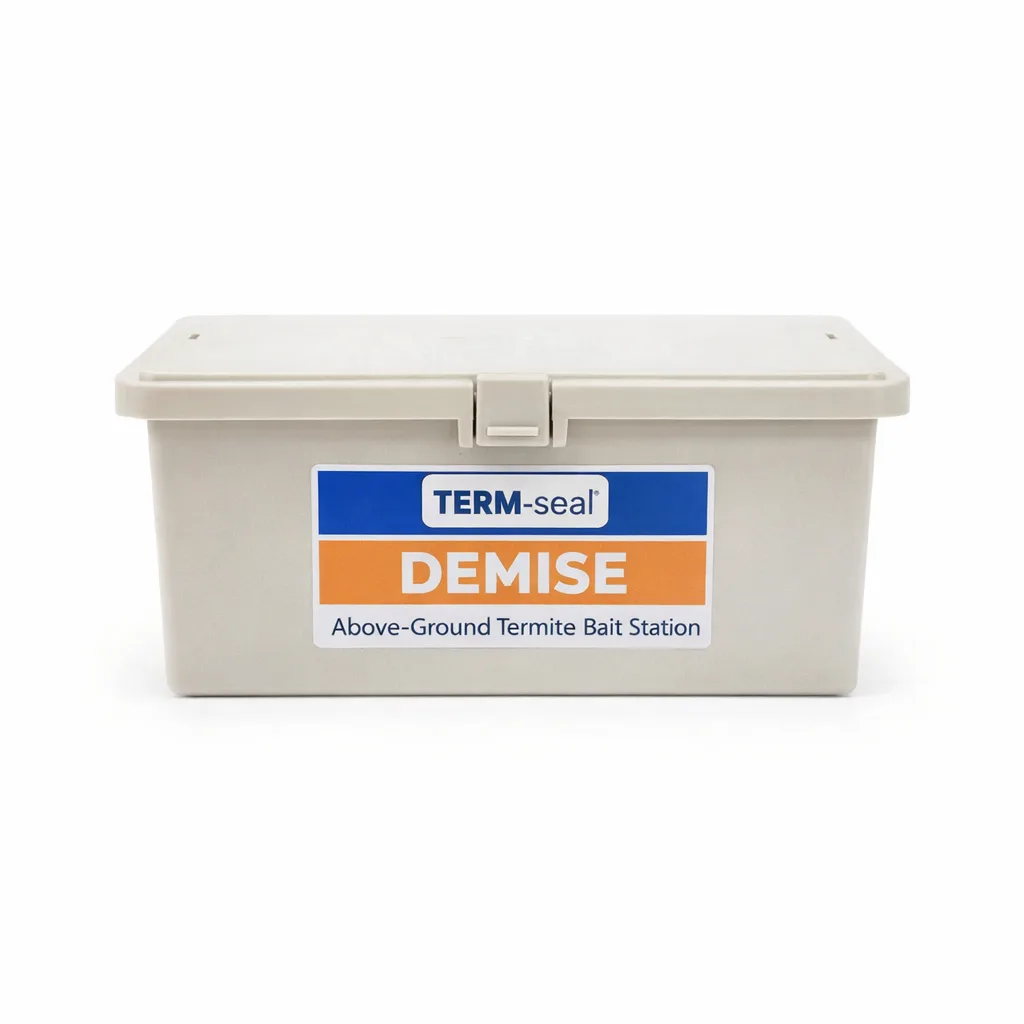
Choosing between an above-ground termite bait station and an in-ground station depends mainly on where termite activity has been found. Above-ground stations are intended for accessible, active termite workings, while in-ground stations are generally used to monitor likely termite entry and foraging areas around a building when live termites have not been located.
At a glance
Known Active Workings
Use above-ground stations directly over accessible termite workings or feeding areas.
Perimeter Monitoring
In-ground stations support monitoring around likely entry points and building perimeters.
Demise Application
The Demise station is designed for active termite activity, not in-ground installation.
Ongoing Inspection
Regular inspection is needed to monitor feeding and manage bait replacement.
Above-ground stations: targeted treatment
An above-ground station is suited to an infestation that has already been traced to an accessible feeding site. It can be positioned directly over visible termite workings or attached to infested timber, placing the approved bait where termites are already feeding.
This approach can be useful when termites are active inside a building, in accessible structural timber, or at another reachable location. The station provides a contained place for bait and supports ongoing observation of feeding activity. The TERM-seal DEMISE system is designed for this type of targeted application, using above-ground stations with approved Abide termite bait when active termites are identified.
When it fits best
- Live termites or fresh workings are visible.
- The feeding area can be reached without unnecessarily disturbing the colony.
- The treatment site is suitable for securely fixing a station.
- Regular inspections can be carried out under a termite management plan.
Correct positioning matters. The station should be placed directly over the active workings or feeding area, secured to the timber or another suitable surface, and closed firmly to help maintain a dark environment. Minimising disturbance during inspection can help avoid interrupting feeding.
In-ground stations: perimeter monitoring
In-ground stations are generally placed in soil, through suitable paved areas, or at strategic points around a building. Their purpose is to monitor likely termite activity before termites have entered the structure or when the active feeding site cannot be found.
They may suit properties where there is no confirmed indoor feeding location but the building has risk factors such as garden beds, soil contact, construction joints, or nearby vegetation. Instead of treating a known feeding point, the stations create monitored locations along potential termite foraging routes.
When it fits best
- No live termites have been located in an accessible part of the building.
- Monitoring is required around the perimeter or other likely entry areas.
- Stations can be installed where they will remain accessible for inspection.
- A broader termite management program is being established or maintained.
In-ground stations are not a replacement for investigating signs inside the building. They should be used as part of a planned inspection and monitoring program, with placement and inspection frequency determined by the system instructions and site conditions.
Above-ground vs in-ground at a glance
The main difference is the relationship between the station and the known infestation. An above-ground station follows confirmed activity to the feeding site. An in-ground station monitors possible activity in the surrounding soil or along the building perimeter.
- Known active workings: An above-ground station is the more direct fit when termites are feeding in accessible timber.
- No confirmed feeding site: In-ground stations may provide useful monitoring points around likely entry areas.
- Activity inside a building: Above-ground baiting can place the approved bait directly at the active location.
- Ongoing perimeter surveillance: In-ground stations can support a wider monitoring layout around the structure.
- Both situations: A qualified treatment plan may use both approaches where the property requires targeted baiting and perimeter monitoring.
What to check before choosing
Start with a complete inspection rather than choosing a station based only on convenience. Confirm whether termites are currently feeding, where the workings are located, whether the site can be accessed safely, and whether the station can be checked without being disturbed.
Also confirm compatibility between the station and the bait. The Demise station is part of the TERM-seal DEMISE termite monitoring and baiting system, which uses TERM-seal’s Abide termite bait. Add bait only according to the applicable product label and treatment plan; the station itself should not be treated as a complete termite-control solution.
Whichever approach is selected, regular inspection is essential. Above-ground stations need monitoring so feeding can be observed and bait can be replenished or replaced when required. In-ground stations also need scheduled checks so activity is detected and the treatment response can be managed. Keep bait away from children, pets, food, and food-preparation areas, and follow all relevant label directions.
Where the Demise station fits
The Demise Above-Ground Termite Bait Station is intended for active termite workings and feeding areas, not as an in-ground perimeter station. It is most appropriate when the termite site is accessible and a contained, inspectable station can be placed directly over the activity.
For a confirmed feeding site, this targeted format can be more suitable than waiting for termites to find a station installed elsewhere. If no active workings can be located, an in-ground monitoring strategy may be more appropriate, subject to a broader termite inspection and management plan.