


How to Plan a Termite Barrier System for New Builds and Renovations

Planning a termite barrier system for a new build or renovation starts before excavation and continues through construction, inspection and maintenance. The aim is to create a continuous, inspectable defence around likely termite entry points while coordinating termite protection with waterproofing, drainage, slabs, walls and service penetrations.
At a glance
Plan Entry Points
Design the barrier around slabs, walls, joints and service penetrations before construction begins.
Use Suitable Surfaces
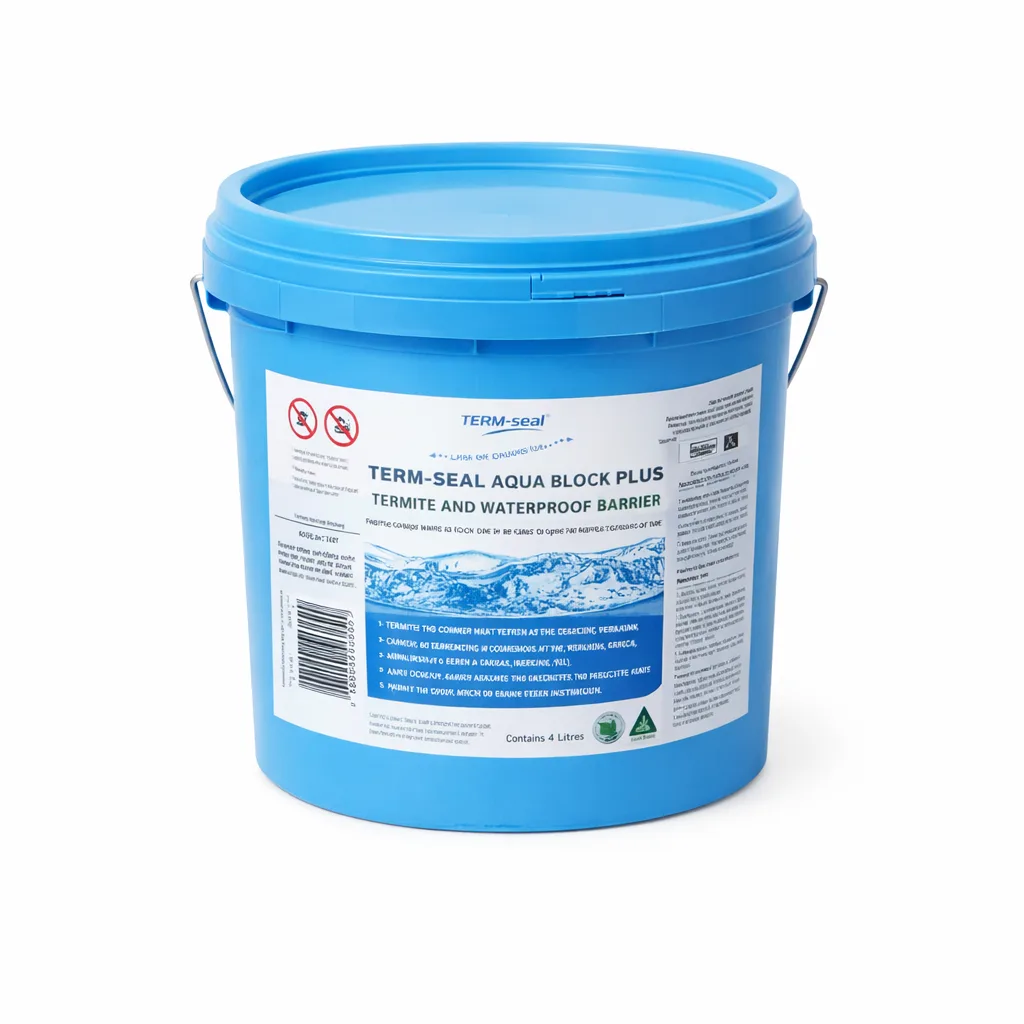
TERM-seal Aqua Block Plus forms a flexible membrane on supported masonry, brick, concrete and fibrous panelling.
Prepare And Apply
Prepare substrates carefully and apply the coating by brush or roller as directed.
Cure Before Covering
Allow the membrane to cure before backfilling, covering or continuing construction.
Maintain Inspection Access
Keep inspection zones accessible because barriers do not replace ongoing termite inspections.
Start with the building design
Review the plans with the builder, designer, pest professional and, where relevant, the waterproofing contractor. Identify slab edges, masonry walls, piers, joints, control joints, pipe penetrations, changes in level and areas that will be concealed by soil, paving or finishes.
Termite protection works best when the system is designed as a connected layout rather than a collection of isolated treatments. Decide where the barrier will remain visible for inspection and where a concealed barrier is unavoidable. Maintain access to inspection zones and avoid details that allow soil, stored materials or landscaping to bridge the protected line.
Choose the barrier approach
New buildings may combine physical barriers, treated membranes, collars, seals and construction details. Renovations often require a more targeted approach around existing walls, extensions, penetrations and areas where the original termite management system is incomplete or difficult to inspect.
A liquid membrane can be useful where a seamless coating is needed across suitable building surfaces. TERM-seal Aqua Block Plus 4L is described as an acrylic polymer-based liquid that cures to form a flexible, waterproof and termite-resistant membrane. The product information identifies it for masonry, fibrous panelling, brick and concrete, with application by brush or roller.
The 4L pail is suited to smaller or more localised coating work, although the quantity required depends on the treated area, surface condition and label requirements. Do not estimate coverage from a similar product; use the current container directions or technical documentation for the actual project.
Plan substrate preparation
Barrier performance depends on the surface beneath it. Before coating, remove loose or friable material, dirt, dust, grease, mould-release residues and other contaminants that could affect adhesion. Repair unsuitable surfaces and resolve active water or structural problems before applying a termite and waterproofing product.
Confirm that each substrate is supported by the product label. For TERM-seal Aqua Block Plus, the available information specifically identifies masonry, fibrous panelling, brick and concrete. Other surfaces should not be assumed suitable simply because they appear similar.
Coordinate penetrations and junctions
Pipe penetrations, service entries, joints and changes between materials are common locations for gaps. Detail these areas before construction closes them off. A barrier system may require compatible collars, sealants or membranes so that the protected line remains continuous around the penetration.
Where a liquid coating is specified, apply it evenly to the prepared areas by brush or roller as directed. Avoid leaving pinholes, skips or untreated edges. Pay particular attention to corners, construction joints and transitions where movement or irregular geometry can interrupt coverage.
Apply before concealment
Plan the work so the treated area can be checked before it is covered. TERM-seal Aqua Block Plus is intended to be applied before backfilling or concealing the protected section, with curing completed according to the label before construction continues.
Record the locations of barriers, penetrations and concealed treatments with photographs and marked-up plans. Keep product details, batch information where available, application notes and installer information with the building records. This documentation can help future owners and inspectors understand the system.
Allow for termite inspections
A barrier is one part of termite management, not a replacement for sound construction practices or ongoing inspections. Subterranean termites can sometimes bridge barriers, particularly where soil, landscaping, stored items or later alterations create an unintended route.
Before handover, check that inspection zones remain accessible and that paving, garden beds, cladding, steps and services have not hidden the protected perimeter. Arrange inspections at intervals appropriate to the building, site conditions and professional advice. Renovations should also include a review of whether new work has disturbed or bypassed an existing barrier.
Handle chemical products responsibly
The available product information identifies bifenthrin as the active termite-control agent in TERM-seal Aqua Block Plus. Read the current label before use and follow its directions for personal protection, surface preparation, application, curing, storage and disposal.
Keep the product away from children, food, animal feed and waterways. Prevent spills and wash-off from entering drains or watercourses. Where the project requires a certified system, licensed pest professional or specific building-system documentation, obtain that advice before work begins.
Planning checklist
- Review the plans for termite entry points and areas that will become concealed.
- Choose compatible physical, chemical and waterproofing components for the project.
- Confirm supported substrates and prepare every surface thoroughly.
- Detail penetrations, joints, corners and material transitions as part of one continuous system.
- Apply coatings before backfilling or covering, then allow the required cure time.
- Photograph and document concealed work before it disappears from view.
- Protect inspection zones and schedule ongoing termite inspections after completion.
 Mosquito Traps